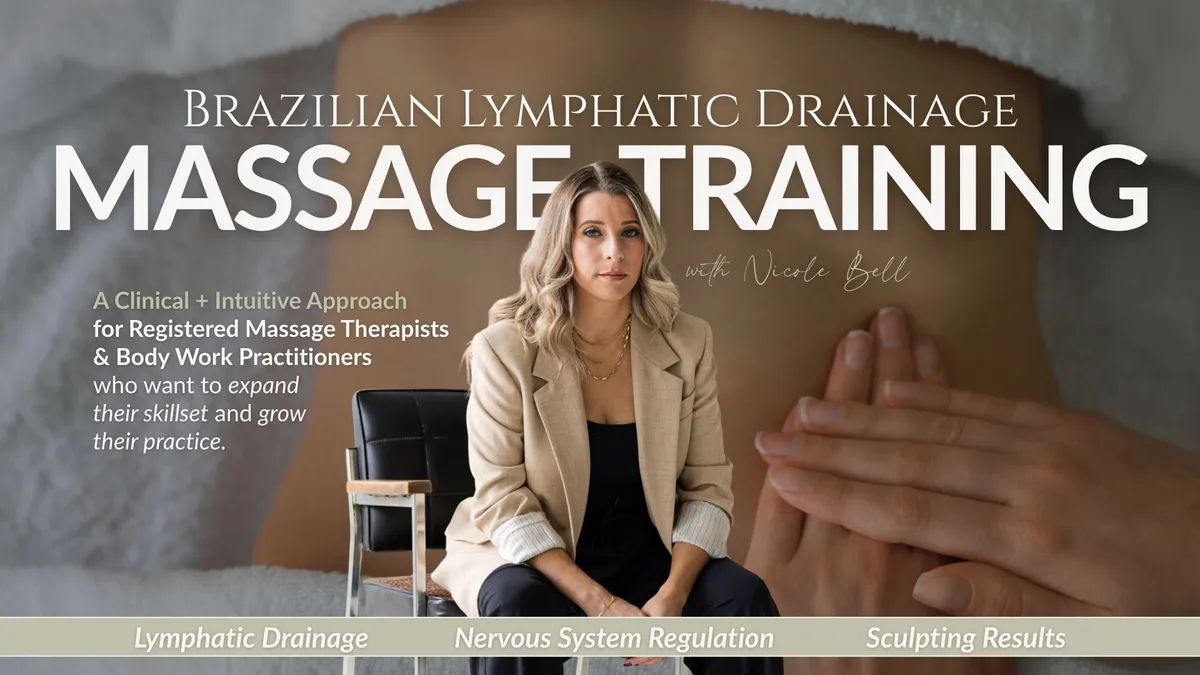
Learn the technique. Understand the lymphatic system. Leave confident enough to bring the treatment into your practice.
A hands-on, small-group training for RMTs and qualified bodywork professionals who want to learn Brazilian Lymphatic Drainage in a way that combines lymphatic principles, body sculpting techniques, nervous system regulation, and a thoughtful whole-body approach.
A hands-on, small-group training for RMTs and qualified bodywork professionals who want to learn Brazilian Lymphatic Drainage in a way that combines lymphatic principles, body sculpting techniques, nervous system regulation, and a thoughtful whole-body approach.
More Than Learning a Massage Sequence
Brazilian Lymphatic Drainage has become well known for the immediate visual changes clients can experience — less puffiness and fluid retention, enhanced body contour and a feeling of lightness following treatment.
But creating a great treatment isn't simply about memorizing a series of movements.
You need to understand where you're moving fluid, why you're working in a particular order, how much pressure to use, when to modify your approach, and what the body is communicating back to you.
That is the focus of this training.
Rather than teaching you a sequence to copy and send you home, I want you to understand the foundations behind the treatment so that you can perform it with confidence, intention and awareness.
You'll learn a complete Brazilian Lymphatic Drainage treatment while also developing a deeper understanding of the lymphatic system, treatment sequencing, practitioner safety and how nervous system regulation can be incorporated into the client experience.
What is Brazilian Lymphatic Drainage?
Brazilian Lymphatic Drainage is a dynamic approach to lymphatic bodywork that combines lymphatic drainage principles with faster-paced, rhythmic and sculpting-focused techniques.
While traditional Manual Lymphatic Drainage is generally very light, slow and repetitive, the Brazilian approach incorporates varied pressure, sweeping movements and body-contouring techniques while continuing to respect the body's natural lymphatic pathways.
The result is a treatment that brings together wellness and aesthetics.
Clients often seek Brazilian Lymphatic Drainage to support fluid movement, reduce feelings of puffiness or heaviness, encourage relaxation and create noticeable changes in the appearance and contour of the body.
CURRICULUM
What You'll Learn
Lymphatic Foundations
Before we put our hands on the body, we'll build the foundation.
You'll learn about the lymphatic system, its primary structures and drainage pathways, how lymph moves through the body and why understanding anatomy matters when performing this treatment.
We'll discuss major lymphatic structures and drainage areas, including the cervical, axillary and inguinal regions, as well as the importance of the thoracic duct and the body's asymmetrical drainage patterns.
Most importantly, you'll learn how this anatomy translates into what you're actually doing with your hands.
BLD vs. Traditional MLD
We'll explore the similarities and differences between traditional Manual Lymphatic Drainage and Brazilian Lymphatic Drainage, including differences in treatment intention, pace, pressure, rhythm and technique.
Understanding this distinction will help you recognize when you're performing drainage-focused work versus when you're incorporating the more dynamic sculpting elements of the Brazilian approach.
Treatment Principles
You'll learn the principles that guide the entire treatment, including:
Direction and drainage pathways — understanding where you are directing fluid and why.
Proximal before distal — creating space within the system before attempting to move fluid from farther away.
Pressure — learning when lighter pressure is appropriate for superficial lymphatic work and how pressure can change when incorporating sculpting techniques.
Rhythm and repetition — creating consistent movement that supports both lymphatic flow and the client's nervous system.
Treatment progression — understanding why the order of your treatment matters instead of simply memorizing a list of steps.
Safety, Contraindications & Clinical Awareness
Knowing when not to perform a treatment is every bit as important as knowing how to perform one.
We'll review contraindications, precautions, health-history considerations, recent surgery, inflammation, vascular concerns and situations where treatment should be modified, postponed or referred to another healthcare provider.
The goal is for you to leave with stronger clinical reasoning — not simply another modality.
Nervous System Regulation
One of the foundations of my approach is recognizing that the client's nervous system is part of the treatment.
We'll discuss how your environment, touch, rhythm, pacing and breathing cues can help create a grounded treatment experience.
Instead of separating relaxation from results, we'll look at how the two can work together.
The Complete Treatment
Then we put everything together.
You'll be guided through my complete Brazilian Lymphatic Drainage treatment from beginning to end, including:
Opening the lymphatic system, upper-body and arm work, abdominal drainage and sculpting, lower-body drainage, key lymphatic pumping areas, full-body integration and closing techniques.
You'll learn the treatment through demonstration, hands-on practice and receiving the techniques yourself, giving you the opportunity to understand both what the movement should look like and what it should feel like.
LOGISTICS & FORMAT
Training Blueprint
This is a small group training that only consistent of 6 students per training day.
Prerequisites: You must be a licensed RMT to enroll in this clinical-grade training.
SCHEDULE
January 31st, 2027
March 14th, 2027
9:00 AM – 4:00 PM
FORMAT
7 hour in person training.
Take home training manual
Each student will receive the treatment and give
2 full treatments.
LOCATION
Refine Medical Aesthetics
68 King St E. Unit 2, Bowmanville ON L1C 3X2
The Approach Behind the Training
My approach to Brazilian Lymphatic Drainage brings together four key intentions:
Lymphatic Support
Working intentionally with the body's natural lymphatic pathways and fluid movement.
Nervous System Regulation
Creating an environment and treatment rhythm that encourages the body to settle rather than forcing change.
Whole-Body Wellness
Looking beyond aesthetics and considering how the treatment can contribute to an overall feeling of lightness, relaxation and well-being.
Immediate Visual Results
Incorporating Brazilian-inspired sculpting techniques that can create noticeable changes in puffiness, bloating and body contour.
The goal isn't to choose between wellness or results.
It's learning how to thoughtfully bring the two together.
Past Student Reviews
Nicole provided a thorough and easy to follow course that included a considerable amount of practical time which helped with putting the theory into practice! She was super helpful and made the day of learning enjoyable. Highly recommend her courses!
Nicole is an excellent instructor. Throughly enjoyed learning BLD.
Nicole provided a thorough and easy to follow course that included a considerable amount of practical time which helped with putting the theory into practice! She was super helpful and made the day of learning enjoyable. Highly recommend her courses!
INVESTMENT
Secure Your Spot
1 Day in Person Training on
Sunday, January 31, 2027
$750 + HST
Pay in full or flexible installment options available at checkout.
Held at Refine Medical Aesthetics in Bowmanville, ON
Course runs from 9am - 4pm
Certification Upon Completion
Host a Brazilian Lymphatic Drainage Training at Your Clinic
Want to bring Brazilian Lymphatic Drainage Training directly to your team?
I offer private, on-site BLD training for clinics and groups, allowing your practitioners to complete the full hands-on training together — right in your own space.
I’ll travel to your clinic and provide the same comprehensive training experience, including the educational foundations, full treatment demonstration, hands-on practice, individualized feedback, training manual and treatment resources.
A minimum of 4 participants is required to host a training.
This is a great option for clinics looking to expand their treatment offerings, train multiple practitioners at once, or create a consistent Brazilian Lymphatic Drainage service across their team.
Interested in hosting?
Submit an inquiry below with your clinic location and approximate number of participants, month you are interested in hosting a training, travel requirements and training details. I offer both weekday and weekend on-site trainings, however weekday dates have greater availability and flexibility, while weekend training dates are very limited.